
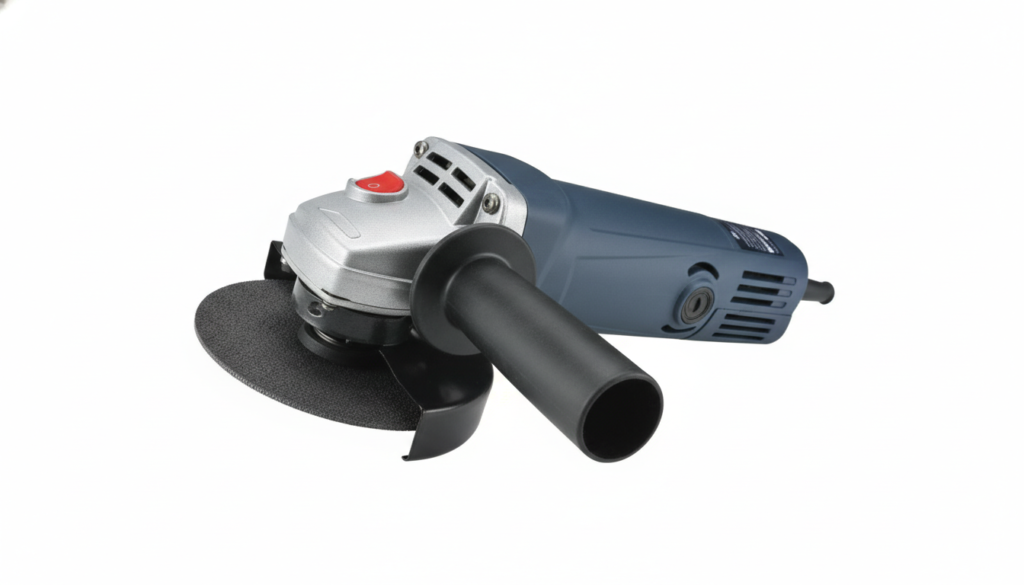
If you’re working in construction, welding, or metal fabrication in Nigeria, an angle grinder is one of those tools you’ll use almost every day. But walk into any hardware store in Port Harcourt or Lagos, and you’ll see dozens of options; different brands, sizes, power ratings, and price points that can make your head spin.
So how do you know which angle grinder is right for your job? More importantly, how do you avoid wasting money on a cheap knock-off that overheats after two weeks or buying an oversized machine you don’t actually need?
This guide breaks down everything you need to know about buying an angle grinder in Nigeria; from disc size to power ratings to the brands that actually hold up on Nigerian job sites.
Why Choosing the Right Angle Grinder in Nigeria Matters
On construction sites, angle grinders are used for everything from cutting rebar and smoothing welds to grinding down concrete and sharpening blades. But here’s the thing: the wrong grinder will slow you down, wear out fast, or worse; become a safety hazard.
A grinder that’s too small won’t cut through thick metal. A grinder that’s too big and heavy becomes exhausting to use all day. And a poorly built grinder? It’ll overheat, stall out, or break down when you need it most.
The good news is that once you understand the basics; disc size, power, and build quality; choosing the right angle grinder becomes straightforward.
1. Disc Size: The Most Important Decision
Angle grinders are categorized by the diameter of the grinding or cutting disc they use. In Nigeria, the most common sizes you’ll see are 115mm (4.5 inches), 125mm (5 inches), and 230mm (9 inches).
Here’s what each size is best for:
115mm (4.5 inches) — The All-Rounder
This is the most popular size worldwide, and for good reason. A 115mm angle grinder gives you a good balance of power, control, and versatility. It’s light enough to handle comfortably for hours but strong enough to cut through rebar, grind down welds, and smooth rough metal surfaces.
Maximum cutting depth: About 30mm (just over 1 inch)
Best for: Welders, metal fabricators, general construction work, tight spaces, precision cutting and grinding
Power range: Usually 500W to 900W
If you’re not sure what size to get, start here. Most professionals in construction and welding keep at least one 115mm grinder in their toolkit. It handles the majority of daily tasks without being too heavy or bulky.
125mm (5 inches) — A Bit More Reach
The 125mm grinder is almost identical to the 115mm, but with slightly more cutting depth and a bit more disc surface area. The extra reach can be helpful when cutting thicker materials or working on larger jobs.
Maximum cutting depth: About 38mm (1.5 inches)
Best for: Construction crews, plumbers, electricians, general contractors who need a bit more power than the 115mm
Power range: Usually 700W to 1200W
Interestingly, in many hardware stores in Nigeria, the price difference between 115mm and 125mm discs is minimal — so you’re getting a bit more cutting power for roughly the same cost. If you’re on the fence, the 125mm is a solid choice.
230mm (9 inches) — Heavy-Duty Only
This is the big boy. A 230mm angle grinder is heavy, powerful, and designed for serious industrial work — cutting through thick steel beams, concrete slabs, and heavy-duty metal fabrication.
Maximum cutting depth: About 70mm (nearly 3 inches)
Best for: Professional welders, shipyard workers, industrial fabricators, masons cutting concrete or brick
Power range: Usually 2000W to 2400W
Here’s the catch: many construction companies and safety-conscious job sites actually ban 9-inch grinders due to the high risk of kickback injuries. The large, heavy disc spinning at high speed can cause violent recoil if it jams or catches on material. Unless you’re doing heavy-duty industrial work and have proper training, stick with the smaller sizes.
Power Rating: How Much Wattage Do You Need?
2. Power Rating: How Much Wattage Do You Need?
The power of an angle grinder is measured in watts (W). More watts = more power to cut through tough materials without the motor stalling.
Here’s a simple guide:
500W to 900W — Good for occasional use, light cutting, and grinding. Fine for DIY or light construction work.
700W to 1200W — Ideal for regular professional use. This range handles most construction and welding tasks without issues.
2000W and above — Heavy-duty industrial work only. If you’re cutting thick steel or concrete regularly, you’ll need this much power.
Pro tip for Nigeria: Our power supply can be inconsistent, especially outside major cities. If you’re working on sites with unreliable electricity or using a generator, make sure your grinder is rated for 220-240V (the Nigerian standard) and that your generator can handle the wattage. A 2000W grinder will need a generator that can supply at least that much power consistently.
3. Corded vs. Cordless Angle Grinder: What Works in Nigeria?
Corded angle grinders plug into an outlet or generator. They deliver consistent power and never run out of charge, which is why most professionals in Nigeria prefer them. As long as you have access to electricity or a generator on-site, corded is the way to go.
Cordless (battery-powered) angle grinders are convenient for remote job sites, scaffolding work, or areas with no power access. However, batteries don’t last long under heavy use, and replacement batteries can be expensive in Nigeria. If you go cordless, budget for at least two batteries so you can swap them out.
For most construction and welding work, a corded angle grinder in Nigeria is the better choice. It’s cheaper, more reliable, and you don’t have to worry about battery life when you’re in the middle of a job.
4. Best Angle Grinder Brands in Nigeria for Construction
Not all angle grinders are built the same. When shopping for an angle grinder in Nigeria, the brand you choose makes a huge difference in how long the tool will last. Cheap, unbranded grinders might save you money upfront, but they often overheat, break down quickly, or have weak motors that stall under pressure.
Here are the brands that professionals in Nigeria trust:
Bosch (Best Overall)
Bosch angle grinders are known for durability, smooth operation, and strong motors. The Bosch GWS series (like the GWS 700 and GWS 750) is extremely popular among welders and fabricators in Nigeria. They’re not the cheapest, but they last.
Makita
Another reliable brand. Makita grinders are lightweight, powerful, and handle heavy use well. They’re a favorite among construction workers and metalworkers.
DeWalt
DeWalt builds tough, professional-grade tools. Their angle grinders are heavier than Bosch or Makita, but they deliver consistent power and hold up on rough job sites.
INGCO
INGCO is a budget-friendly brand that’s widely available in Nigeria. While not as durable as Bosch or Makita, INGCO grinders offer decent performance for the price. They’re a good option if you’re just starting out or working on lighter tasks.
Avoid these: Generic, unbranded grinders or extremely cheap models from brands you’ve never heard of. They might work for a few weeks, but they’ll overheat, the motor will burn out, or the disc guard will crack. In the long run, buying cheap costs you more.
5. Key Features to Look For When Buying an Angle Grinder
When you’re comparing angle grinders, check for these features:
Spindle Lock
This locks the disc spindle in place so you can change discs quickly without needing an extra tool. It’s a small feature, but it saves a ton of time when you’re swapping between cutting and grinding discs.
Auxiliary (Side) Handle
Most angle grinders come with a removable side handle that you can attach on the left or right. This gives you better control and reduces fatigue, especially when working at awkward angles. Make sure the handle is sturdy and screws in securely.
Adjustable Disc Guard
The disc guard protects you from sparks and debris. It should be easy to adjust so you can position it based on the direction you’re cutting or grinding. Never use an angle grinder without the guard in place — it’s a safety hazard.
Soft Start Feature (Optional)
High-end grinders sometimes have a “soft start” feature that gradually ramps up the motor speed instead of starting at full power immediately. This reduces the risk of the disc jerking or kicking back when you first turn it on. It’s not essential, but it’s a nice safety feature if you can find it.
6. Angle Grinder Discs in Nigeria: What You Need to Know
The disc is what actually does the work — cutting, grinding, polishing, etc. Discs are sold separately and come in different types depending on the job:
- Cutting discs — Thin discs (usually 1mm to 3mm thick) used for cutting metal, rebar, tiles, or concrete
- Grinding discs — Thicker discs used for grinding down welds, smoothing surfaces, or removing rust
- Flap discs — Used for sanding and finishing metal surfaces
- Wire brushes — Used for cleaning rust, paint, or corrosion off metal
Make sure the disc size matches your grinder. If you buy a 115mm grinder, you need 115mm discs. Never try to force a larger disc onto a smaller grinder; it’s dangerous and will damage the tool.
Pro tip: In Nigeria, 115mm discs are the easiest to find and the cheapest. If you go with a less common size like 150mm or 180mm, you might have trouble sourcing discs locally.
7. Safety First Always
Angle grinders are powerful tools, but they’re also one of the most dangerous if you’re not careful. Every year, workers in Nigeria and around the world are injured because of improper use or lack of protective gear.
Always follow these safety rules:
- Wear safety glasses or a face shield to protect your eyes from sparks and debris
- Wear heavy-duty work gloves
- Never remove the disc guard
- Make sure the workpiece is secured before you start cutting or grinding
- Keep a firm grip on the grinder with both hands (use the auxiliary handle)
- Don’t wear loose clothing, jewelry, or anything that could get caught in the disc
- Inspect the disc before each use — if it’s cracked or damaged, replace it immediately
Final Recommendation: What Should You Buy?
If you’re working in construction, welding, or metal fabrication and shopping for an angle grinder in Nigeria…
Best all-around choice: Bosch GWS 700 or GWS 750 (115mm, 700-750W)
This is the workhorse grinder that will handle 90% of what you throw at it. It’s reliable, durable, and widely available in Port Harcourt, Lagos, and other Nigerian cities. The 115mm disc size is perfect for cutting rebar, grinding welds, and general metalwork.
If you need a bit more power: Makita or DeWalt 125mm grinder (900W-1200W)
The extra disc size and power make a difference if you’re regularly cutting thicker materials or working on larger projects.
If you’re on a budget: INGCO 115mm grinder (700W-850W)
It won’t last as long as a Bosch or Makita, but it’s a decent starter grinder that won’t break the bank. Just don’t expect it to survive years of heavy daily use.
Where to Buy Angle Grinders in Nigeria
You can find a quality angle grinder in Nigeria at most hardware stores and industrial equipment suppliers in Port Harcourt, Lagos, Abuja, and other major cities. Online platforms like Jumia and Jiji also stock a wide range of brands, though it’s always better to buy in person so you can feel the weight and build quality before you commit.
Looking for quality angle grinders with fast delivery in Port Harcourt? Contact Vallzubby Tools & Resources Nigeria Limited; we stock Bosch, Makita, INGCO, and other trusted brands at competitive prices. Browse our power tools collection here.
Final Thoughts on Buying an Angle Grinder in Nigeria
Buying an angle grinder in Nigeria doesn’t have to be complicated. Focus on the right disc size for your work (115mm is the safest bet for most people), make sure the power rating matches your needs (700W-1200W for professional use), and invest in a trusted brand like Bosch or Makita.
Avoid the temptation to buy the cheapest option — it’ll cost you more in the long run when it breaks down. And always, always prioritize safety. No job is worth losing a finger or an eye.
Got questions about which angle grinder is right for your project? Drop a comment below or reach out to us directly. We’re here to help.